ServicesCeramic Window Film
Ceramic Window Film in Stafford
Ceramic window film stops a large share of the sun's heat and nearly all UV without turning your glass dark or mirrored. We explain what the numbers on each sample mean, check your glass, and install the film cleanly so rooms stay cooler and the view stays yours.
What ceramic film is, in plain terms
Ceramic film carries tiny nonmetallic ceramic particles that absorb and reject infrared light, the part of sunlight you feel as heat on your skin. There is no metal layer, so the glass doesn't take on a mirror look, your phone and Wi-Fi signals pass through normally, and the edges won't corrode over the years.
The practical result is that a fairly light ceramic film can keep a room cooler than a much darker dyed film. You don't have to give up daylight to get comfort. That makes it a good fit for living rooms, kitchens and home offices where the view matters, and for desks where screens sit close to the glass.
It isn't always the right pick. If daytime privacy is the main goal, a reflective or privacy film may suit you better, and we'll tell you so. Ceramic film usually costs more than dyed or metalized options, so we'll show you where it earns the difference and where it doesn't.
What your ceramic film installation includes
A glass check before we quote
We note whether each window is single-pane, dual-pane or low-E coated, and look at seals and size. Some film and glass pairings raise the risk of thermal stress cracking, so we match the film to the glass instead of putting one product on every window.
Samples on your own windows
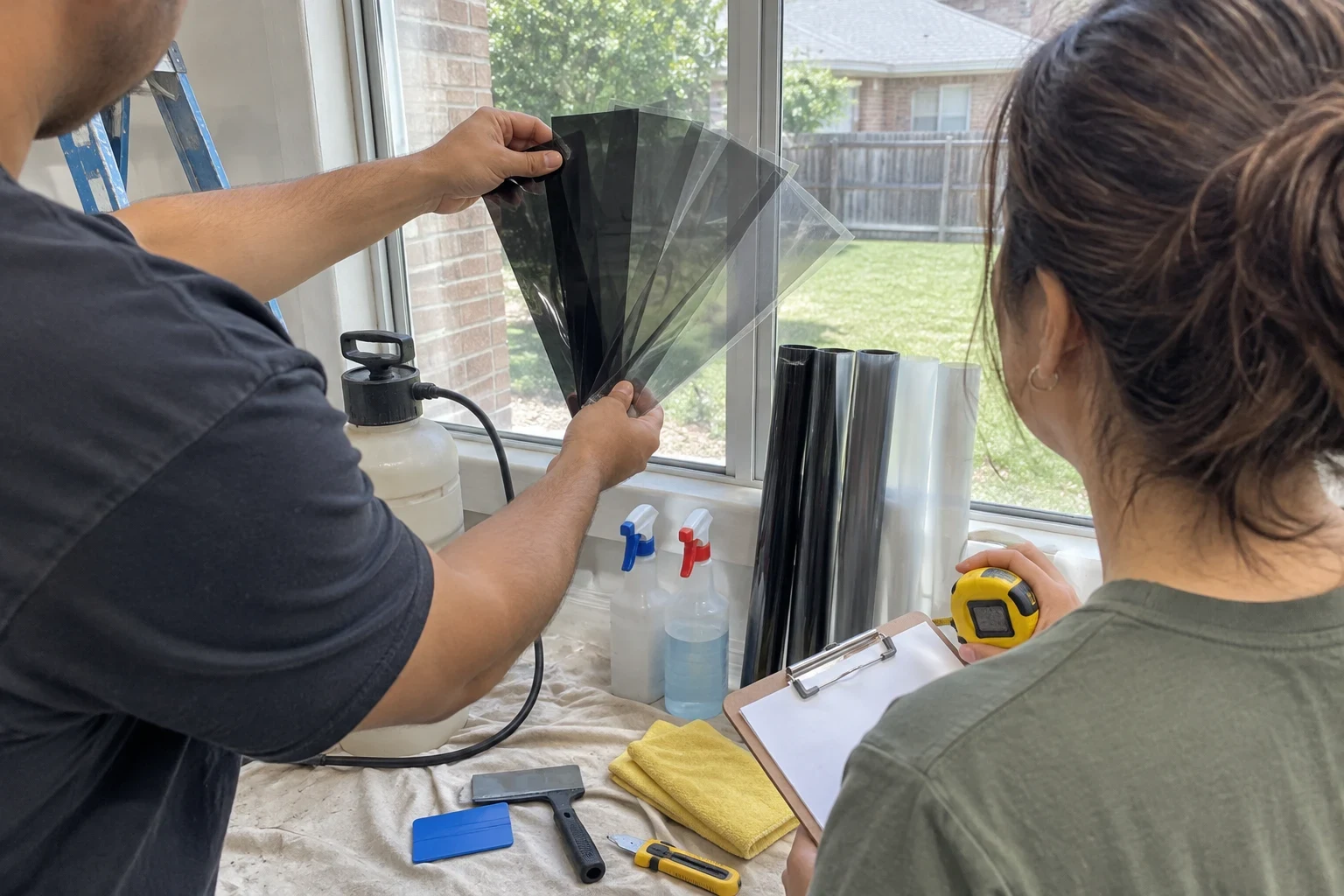
You see each shade on your glass, in your light. We walk you through the three numbers that matter: visible light transmission, which is how much daylight gets through, total solar energy rejected, which is how much heat is stopped, and UV rejection.
Careful prep and trimming
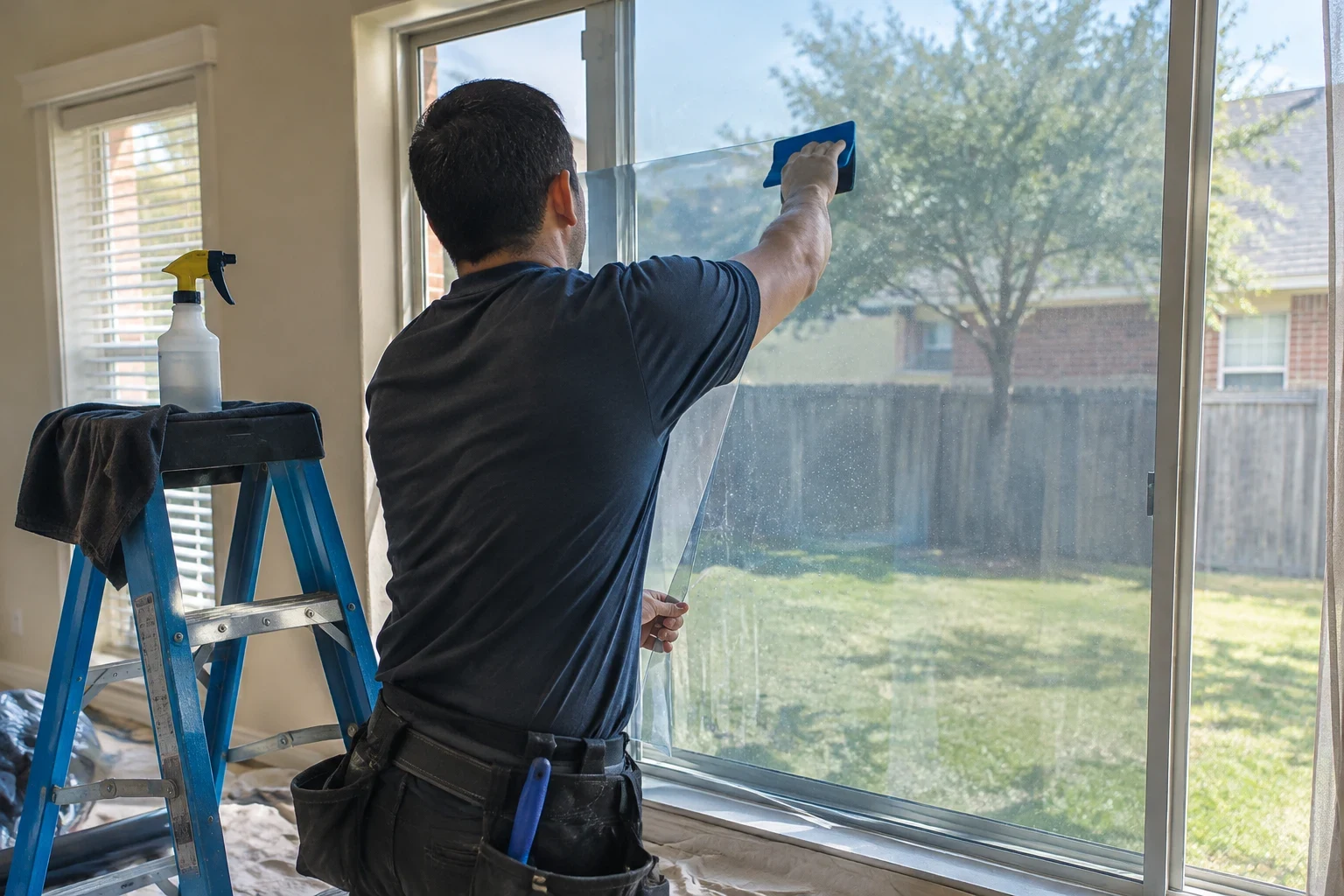
Glass is cleaned and scraped of paint specks and grit, and gaskets are wiped down. Film is trimmed to leave a small, even gap at the edges so it lies flat and stays put.
Protecting the room
Installation uses a soapy slip solution, so we lay drop cloths and cover sills and floors near each window. We only move furniture or blinds with your OK.
Cleanup and care notes
We take away trimmings and backing liners, wipe the sills, and leave you simple instructions for the curing weeks and for cleaning after that.
Signs ceramic film is worth a look
- One room always runs hot
- If a west- or south-facing room stays warm into the evening while the rest of the house feels fine, solar heat is coming in through the glass. In a Stafford summer, that afternoon sun can keep the AC working long after sunset.
- Glare on the TV or monitor
- You find yourself closing blinds in the middle of the day just to see a screen. Ceramic film cuts glare while letting you keep the blinds open.
- Floors and furniture are fading
- UV light bleaches wood floors, rugs, upholstery and artwork. Ceramic film blocks nearly all of it while the glass still looks clear.
- Old tint let you down
- A dyed film that turned purple, bubbled or made the room gloomy is a common reason people ask about ceramic. It holds its color and doesn't rely on darkness to work.
- You worry about phone reception
- Metalized films can weaken cell and Wi-Fi signals indoors. Ceramic film has no metal, so that concern goes away.
How a ceramic film job runs
- 1
A conversation by phone
Tell us which rooms bother you and why: heat, glare, fading or all three. We'll explain the options and set up a time to see the glass for your free quote.
- 2
Measure and recommend
At your place we measure each window, check the glass type and hold up samples. You get a written estimate listed window by window, so you can choose to do just the worst rooms first.
- 3
Installation day
We prep the glass, apply the film over the slip solution, squeegee out the water and trim the edges. A few windows can take a couple of hours, while a whole house can take most of a day, depending on size and access.
- 4
Curing and care
For a few days up to a few weeks, you may see light haze or small water pockets as moisture evaporates; they clear on their own, faster in warm sunny weather. Wait a few weeks before cleaning the film, then use mild soap and a soft cloth, never ammonia or scrub pads.
What moves the price of ceramic film
Ceramic film costs more per square foot than dyed film because of the material itself. Your total depends mostly on how much glass you have and how easy it is to reach. We give you a written estimate after seeing the windows, so the number you hear fits your actual home.
- Glass area and window count
- More square feet means more film and more time. Doing a few hot rooms instead of the whole house is a common way to keep the cost down.
- Height and access
- Second-story windows and tall foyer glass need ladders or staging and extra care, which adds labor.
- Film grade and shade
- Ceramic lines come in grades, and the higher heat rejection grades cost more. We'll show you whether stepping up makes a real difference for that particular room.
- Removing old film
- Worn tint has to come off first, and stubborn adhesive takes time to clean off properly before new film goes on.
- Window shapes
- Arched tops, French doors with grids and small divided panes all mean more cuts and trimming than plain rectangles.
Ceramic window film questions
- Will ceramic film make my rooms darker?
- Only as much as you choose. Ceramic film comes in light shades that most guests won't notice, because the heat rejection comes from the ceramic particles, not from darkness. We'll show you light and medium samples side by side on your glass.
- Is it safe on dual-pane or low-E windows?
- Usually yes, when the film is matched to the glass. We check every window type before recommending a product. Some window manufacturers have conditions about film in their paperwork, so it's worth pulling yours out, and we're happy to help you read what it says.
- Will it affect my phone or Wi-Fi?
- No. Ceramic film contains no metal, so signals pass through the way they did before. That's one of the main reasons people choose it over metalized film.
- How is ceramic different from reflective film?
- Reflective film uses a metal layer that bounces heat away and gives the glass a mirror look, which adds daytime privacy. Ceramic absorbs and rejects infrared heat with a clearer, more natural look. Our Reflective Window Film and Non-Reflective Window Film pages explain each in more detail.
- Does ceramic film give me privacy?
- A clear ceramic film doesn't, and at night a lit room is visible from outside either way. If privacy matters, take a look at Privacy Window Tinting, or ask about combining a darker ceramic shade in the rooms where it counts.
- How much will it lower my energy bill?
- We won't promise a number, because it depends on your windows, which way they face and how your home is cooled. What ceramic film does is cut the solar heat coming through the glass, which eases the load on your AC in sunny rooms and helps them stay comfortable.

Find out which ceramic film fits your windows
Tell us which rooms run hot or glare-heavy, and we'll explain the options and what each would cost. The quote is free, and there's no pressure to choose the priciest film.