ServicesCommercial Window Tinting
Commercial Window Tinting in Stafford, TX
We install window film on storefronts, clinics, showrooms and other business buildings to cut heat, glare and fading. Before anything touches the glass, we explain in plain terms what each film does, how it looks from the street and inside, and what it won't do.
What commercial window film does for your building
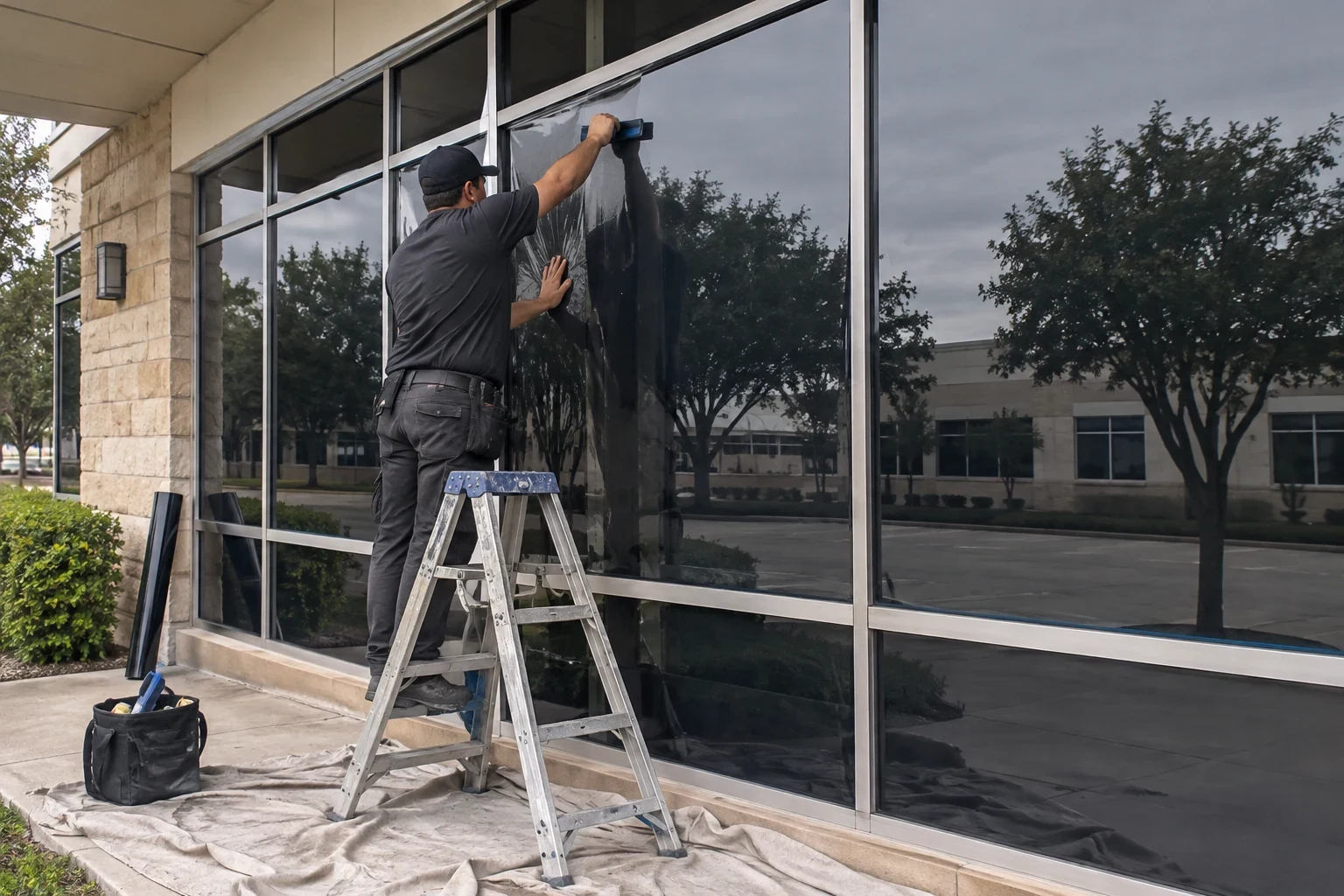
Commercial window film is a thin polyester layer applied to the inside of your existing glass. Depending on the film, it blocks a large share of solar heat, almost all UV light, and the glare that washes out screens and makes the front counter uncomfortable by mid-afternoon.
It is the right call when one side of the building runs hot, when merchandise or flooring near the windows is fading, or when staff keep the blinds shut and the lights on all day. It is not the fix for glass that is already failing, like fogged insulated units with broken seals. If that is what we find, we will tell you plainly instead of covering a problem with film.
In a Stafford summer, west- and south-facing glass takes the hardest hit, so that is usually where we start the conversation.
What the work includes
- 01
A pane-by-pane glass check
We note whether each window is single or dual pane, tempered or annealed, clear or factory tinted. Glass type decides which films are safe, because some films absorb enough heat to stress certain large or dual-pane units.
- 02
Film options side by side
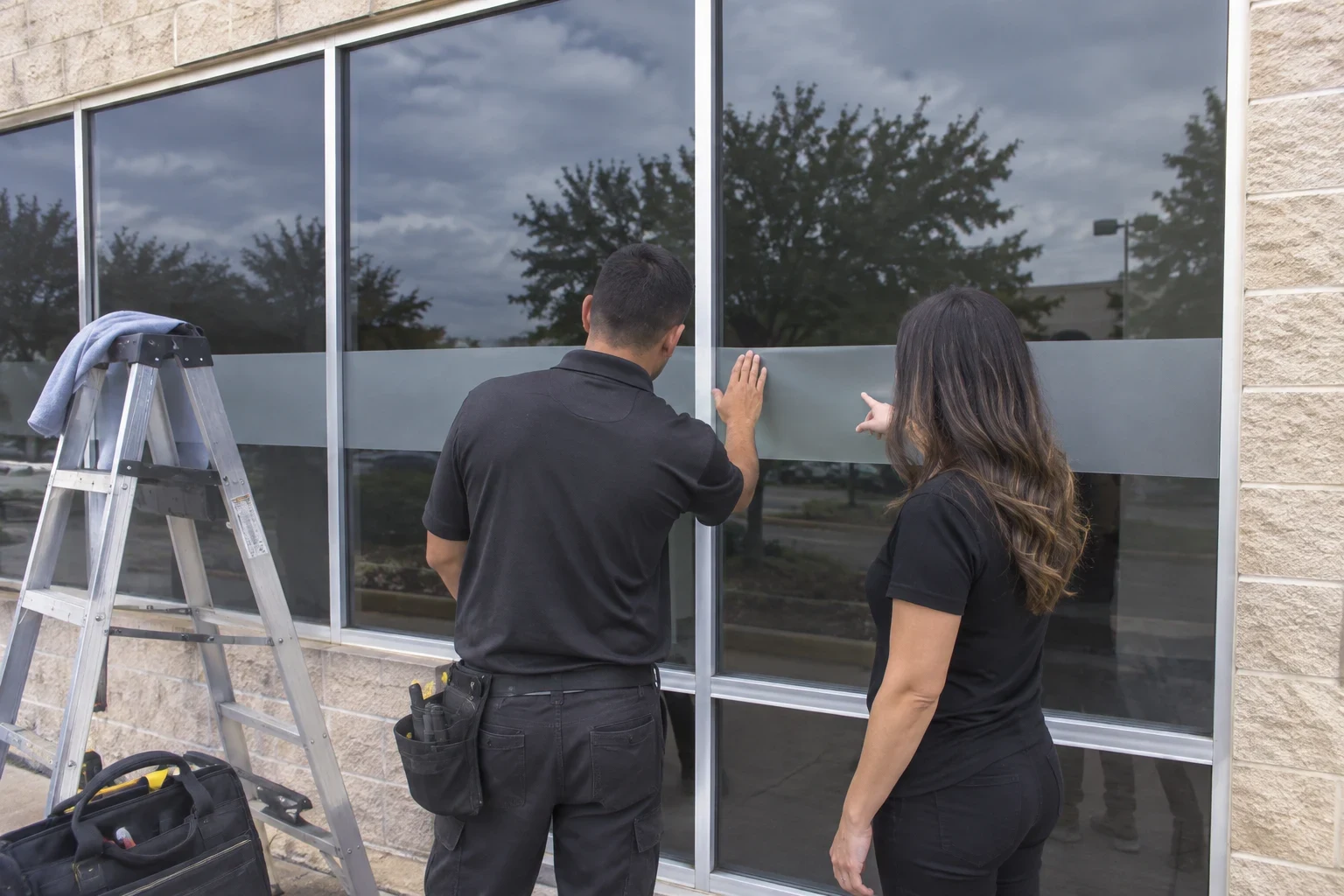
We bring real samples of ceramic window film, reflective window film and non-reflective window film. You see the difference in heat rejection, how much daylight stays, and how each one looks from the parking lot at noon and after dark.
- 03
A written line-item quote
Every window group is listed with the film chosen and the square footage, so you can see exactly what you are paying for and adjust it.
- 04
Work scheduled around your hours
We can install early, after close or in sections, so customers keep coming in and staff keep working.
- 05
Old film removal
If there is bubbling or purple film on the glass now, we strip it and clean off the adhesive first. New film will not bond properly over old residue.
- 06
Careful setup and cleanup
Displays and desks near the glass get covered, and we take all trimmings and liners with us when we leave.
Questions about Commercial Window Tinting?
Call(281) 688-5219Signs your business could use window film
Hot spots near the glass
Customers avoid the seats by the window, or one office is always several degrees warmer than the rest.
Glare on screens and registers
Staff tilt monitors, squint at point-of-sale screens or tape paper over the glass in the afternoon.
Faded stock and signage
UV and heat bleach merchandise, posters, upholstery and flooring that sit in direct sun. Film slows that down, though nothing stops fading entirely.
Blinds that never open
If the shades stay down to keep heat out, you are paying for lighting while hiding your storefront.
A cooling system working overtime
Units serving the sunny side run constantly and the space still feels warm by late afternoon.
Old film that has failed
Peeling edges, bubbles or a purple tint mean the old film is done and is making the building look worn.
How a commercial job runs
- 1
Phone call and site visit
You tell us what bothers you about the space. We set a time to walk the building, measure the glass and check its type.
- 2
Recommendation and samples
We hold samples up to your actual windows and explain the trade-offs in everyday language. Then you get your written quote.
- 3
Install day prep
We cover nearby surfaces, scrape and clean each pane, and cut film to size. Clean glass is most of a good install.
- 4
Application and trimming
Film goes on with a slip solution and is squeegeed flat, then trimmed with a small gap at the edges so it doesn't lift.
- 5
Curing and walkthrough
We walk the job with you and point out anything still drying. A little haze or a few water pockets can show for a few days to a few weeks while the film cures, and we explain how and when to clean it.
What moves the cost
Commercial film is priced by the job, not by a flat number per window. The biggest drivers are how much glass there is and which film suits it. We go through each factor on your quote so nothing comes as a surprise.
- Total square footage
- More glass means more film and more labor, though larger jobs often run more efficiently per square foot.
- Film type
- Ceramic film usually costs more than dyed or basic reflective films because it rejects heat without darkening the glass or adding a mirror look.
- Height and access
- Tall storefronts and second-story glass may need ladders or a lift, which adds setup time.
- Old film removal
- Stripping failed film and scraping adhesive is slow, careful work and is listed separately.
- After-hours scheduling
- Working early, late or in phases to keep you open can affect how the job is staffed.
Commercial window tinting questions
Will the film make our space feel dark?
Not if you choose the right one. Many ceramic and lighter films reject a lot of heat while keeping most of the daylight. We show samples on your own glass so you can judge it before deciding.
Can you work while we're open?
Yes. We can install before opening, after close or one section at a time. The work is quiet and mostly involves water, squeegees and a few covered areas.
Can people see inside at night with reflective film?
Usually, yes. Reflective film gives daytime privacy because it is brighter outside, but once your lights are on after dark the effect flips. If nighttime privacy matters, we can talk about privacy window tinting or decorative film for certain panes.
Do we need landlord or property manager approval?
In leased spaces, often yes. Many leases and property managers have rules about how storefront glass looks from outside. We can give you the film name and samples to share with them before you commit.
Will film hurt our windows?
The wrong film on the wrong glass can cause heat stress cracks, which is why we check every pane first. We only recommend films suited to your glass type and size.
Get straight answers about your glass
Tell us which windows are causing trouble and what you'd like to change. We'll set up a visit, show you real samples and explain each option before you decide anything.