ServicesDecorative Window Tinting
Decorative Window Tinting in Stafford
Decorative window film gives plain glass the look of frosted, etched or patterned glass for a fraction of the disruption of replacing it. We bring real samples to your home, explain what each one does in daylight and at night, and help you pick what fits the room.
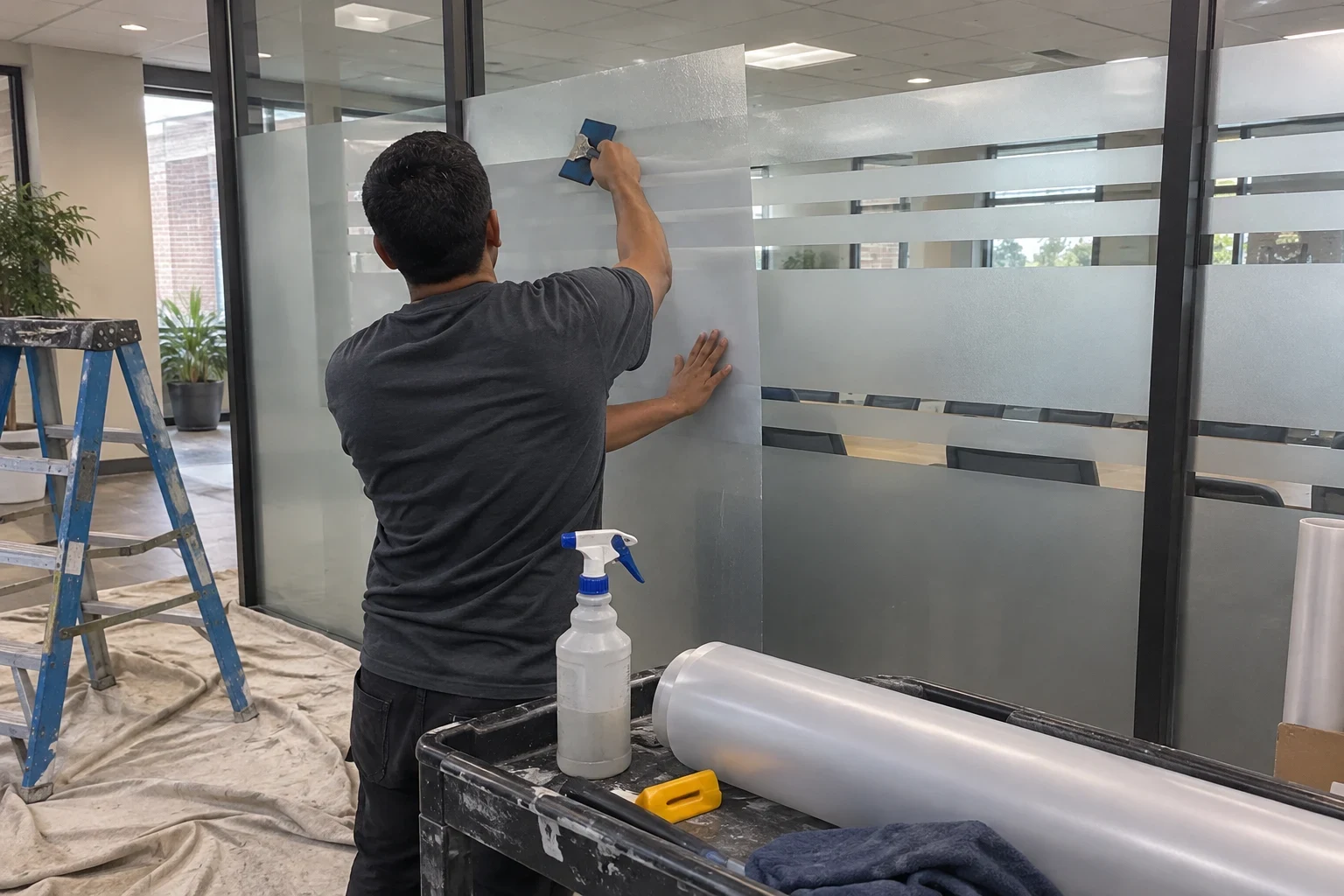
What decorative window film is and when it makes sense
Decorative film is a thin, printed or textured layer applied to the inside surface of your glass. Some styles look like sandblasted glass. Others add lines, gradients, dots or a reeded texture. Light still comes through, but shapes on the other side blur.
It is the right choice when you want a bathroom window, a front door sidelight or a glass cabinet door to look finished and feel more private, and you would rather not live with blinds closed all day. If your main goal is cutting heat, we will tell you that plainly, because a ceramic window film or one of our heat-control options may do more for you. Many customers combine the two.
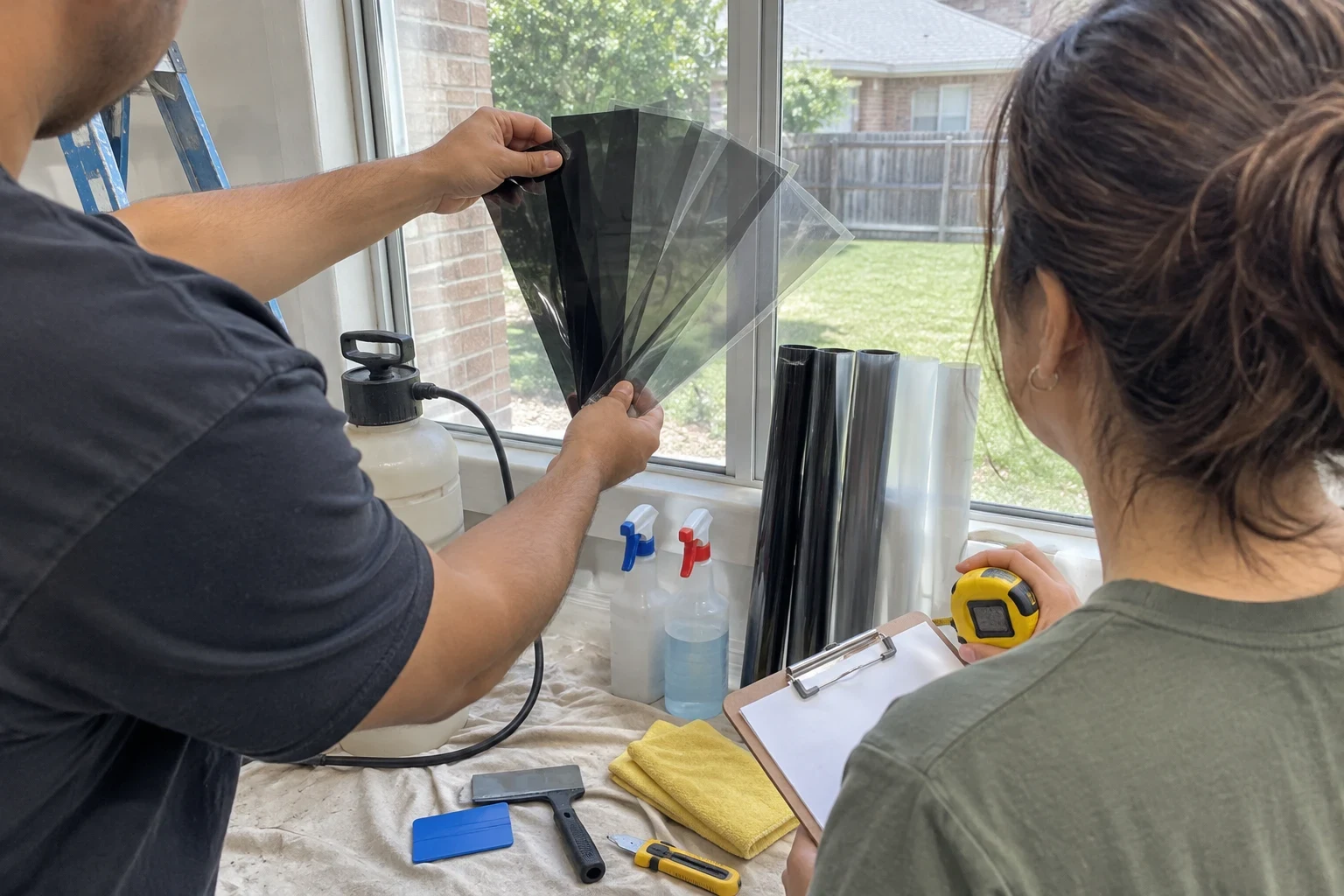
What your decorative film job includes
- 01
Samples you can hold up to your glass
We bring swatches of frosted, gradient and patterned films so you can see them against your own windows and light. A small swatch looks different on a sunny west window than on a shaded bathroom pane, so we test both.
- 02
An honest check of your windows
We look at the glass type, whether it is dual-pane, and how much direct sun it gets. Most decorative films are light and safe on standard glass, and if a particular film is a poor match for a window, we say so before anything is ordered.
- 03
Precise measuring and layout
For full coverage we measure each pane. For partial designs, like a frosted band at eye level, we mark the height with you so it lines up across every window in the room.
- 04
Careful installation and cleanup
We cover nearby floors and sills, clean the glass edge to edge and apply the film wet so it can be positioned exactly. When we leave, the trimmings and drop cloths leave with us.
- 05
Care instructions in writing
You get simple notes on curing time and how to clean the film so it keeps looking sharp for years.
Questions about Decorative Window Tinting?
Call(281) 688-5219Signs decorative film is a good fit for your space
You keep a blind closed all day
A bathroom or street-facing window with the blind always down is a clear sign. Frosted film lets you open the blind and keep the daylight.
Your front door glass shows the whole hallway
Sidelights and door glass often give visitors a straight view into the house. A patterned or etched-look film blurs that view while the entry stays bright.
Plain glass that looks unfinished
Transom windows, glass cabinet fronts and interior French doors can look bare. A subtle pattern adds character without new glass.
Old film that is peeling or bubbling
Aging decorative or privacy film often lifts at the corners or turns cloudy. We remove it, clean off the adhesive and apply a fresh film.
You want privacy but not darkness
Dark tint makes rooms dim. Translucent decorative film keeps rooms light, which suits bathrooms, home offices and stairwells.
How a decorative film installation goes
- 1
A phone call and a visit
You tell us which windows you have in mind and what bothers you about them. We set a time to come out with samples, measure and give you a free quote.
- 2
Choosing the film
We walk you through the options in plain terms: how much each one blurs, how it looks from outside and how it behaves after dark. You decide with no pressure, and if you want time to think, that is fine.
- 3
Installation day
We protect the area, scrape and clean the glass, then lay the film on a slip solution and squeegee the water out. Edges are trimmed with a small gap so the film does not catch on the frame. A typical room of windows is done in a few hours.
- 4
Curing
For the first several days you may see a slight haze or a few small water pockets. That is normal and clears as the moisture evaporates. In the Stafford summer sun it usually clears faster; shaded windows take a little longer.
What affects the cost of decorative film
Every quote is written out so you can see what you are paying for. Price mostly comes down to how much glass there is and how detailed the film or layout is. We explain each line before you agree to anything.
- Amount of glass
- More panes and larger panes mean more material and more time. A single bathroom window costs much less than a wall of French door lites.
- Film style
- A plain frosted film is the simplest option. Printed patterns, gradients and textured films cost more, and some patterns need extra material to keep the design aligned across panes.
- Custom layouts
- Bands at a set height, borders or cut-out designs take extra measuring and trimming by hand, which adds labor.
- Access and old film
- High transoms that need tall ladders take longer. Removing old film and its adhesive is extra work, especially if it has baked onto the glass.
Questions about decorative window tinting
Can people see in at night?
Decorative film blurs the view in both directions, but at night with lights on inside you may see soft shapes and movement from outside. Denser frosted films hide more than light patterns do. If nighttime privacy is the main worry, ask us about the stronger options on our privacy window tinting page.
Can the film be removed later?
Yes. Decorative film is applied to the surface of the glass, not etched into it. We can take it off and clean away the adhesive without harming standard window glass, which makes it a good choice if you might change your style or sell the house.
Will it work on shower glass?
Often, yes. We apply it to the dry side of the enclosure so water and soap do not wear at the edges. We will look at your glass first, since some textured or coated shower glass does not hold film well.
Does decorative film block UV or heat?
Many decorative films block most UV rays, which helps protect floors and furniture near the window. They are not built mainly for heat rejection, though. If a room runs hot, we can explain whether a heat-control film would serve you better.
How do I clean it?
Wait about a week after installation, then use a soft cloth or rubber squeegee with a mild soap and water mix. Skip abrasive pads and ammonia cleaners, which can dull the surface over time.
See the samples on your own windows
Tell us which glass you would like to change and we will bring options to look at in your own light. You will know what each film does and what it costs before you decide.