ServicesHome Window Tinting
Home Window Tinting in Stafford
If a room gets too hot by late afternoon, or the TV disappears behind glare, window film can fix it without heavy curtains. We help you choose a film that cuts heat and UV while keeping your view, and we explain every option in plain English.
What home window film actually does
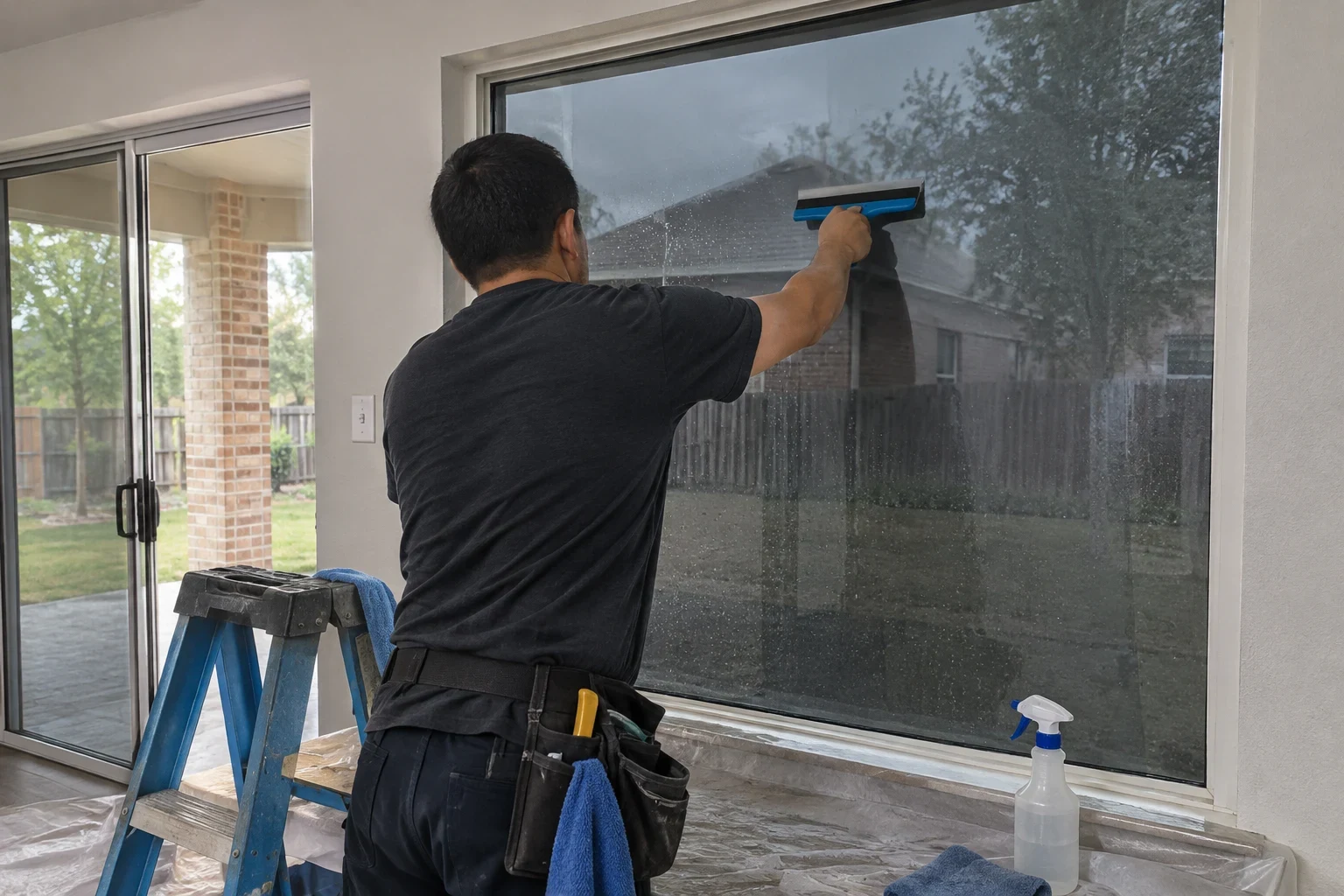
Home window tinting is a thin film we apply to the inside of your glass. Good residential film blocks nearly all of the UV light that fades floors and furniture, and it turns away a large share of the solar heat that comes through a window. You keep the glass you have. The film just changes what gets through it.
The trick is matching the film to the window. A west-facing living room in a Texas summer needs strong heat rejection. A bedroom on the street side may need privacy more than cooling. A north window may need nothing at all. We walk through each room with you and tell you honestly where film will help and where it won't.
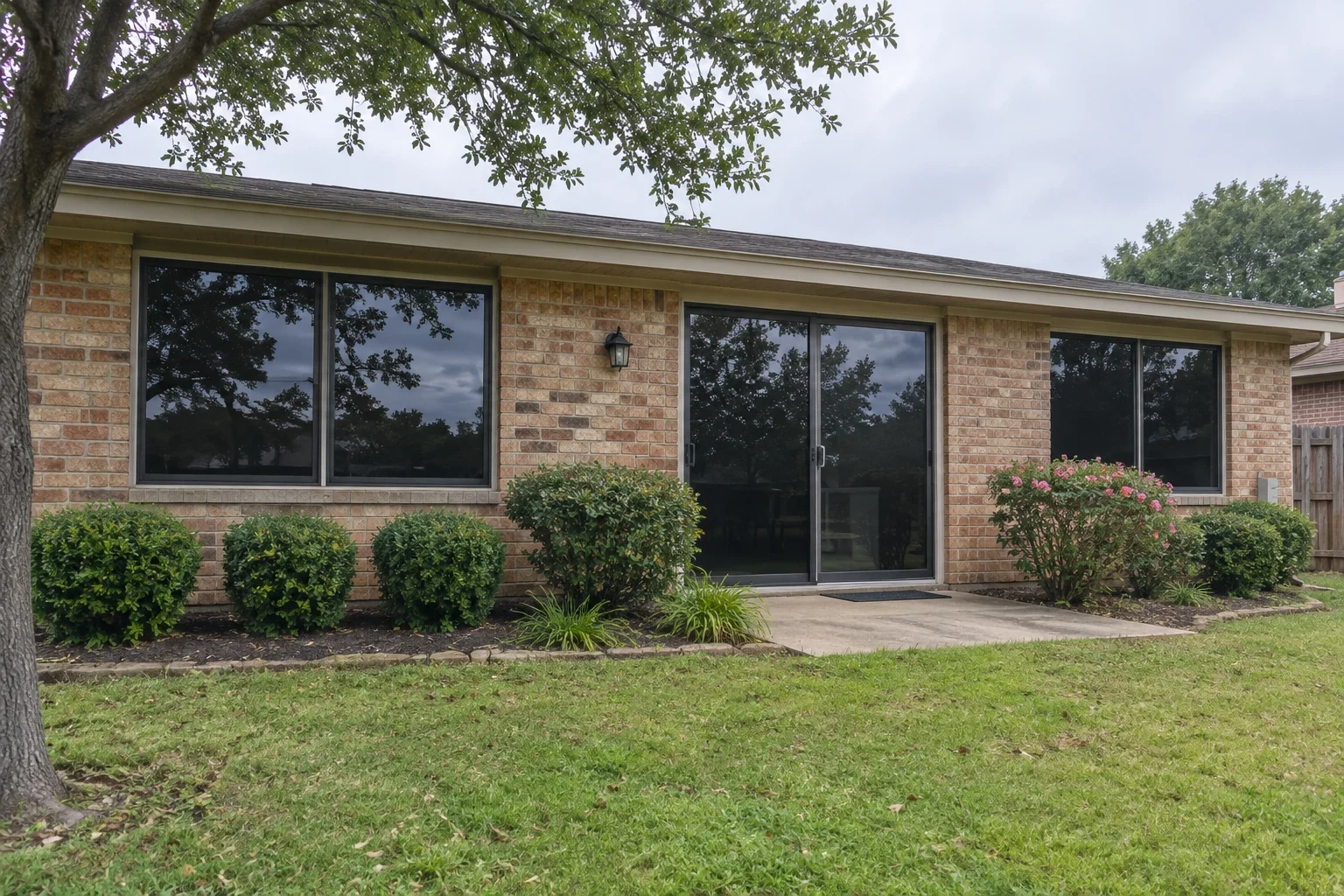
Most homeowners want a film that looks close to clear from the street and doesn't make the house feel dim. Modern ceramic film does that well, and we also carry darker and more reflective options for people who want them.
What's included with every home tinting job
- A room-by-room walkthrough
- We look at which way each window faces, how much sun it gets and what bothers you about it. That tells us whether heat, glare, privacy or fading is the real problem.
- Film samples on your own glass
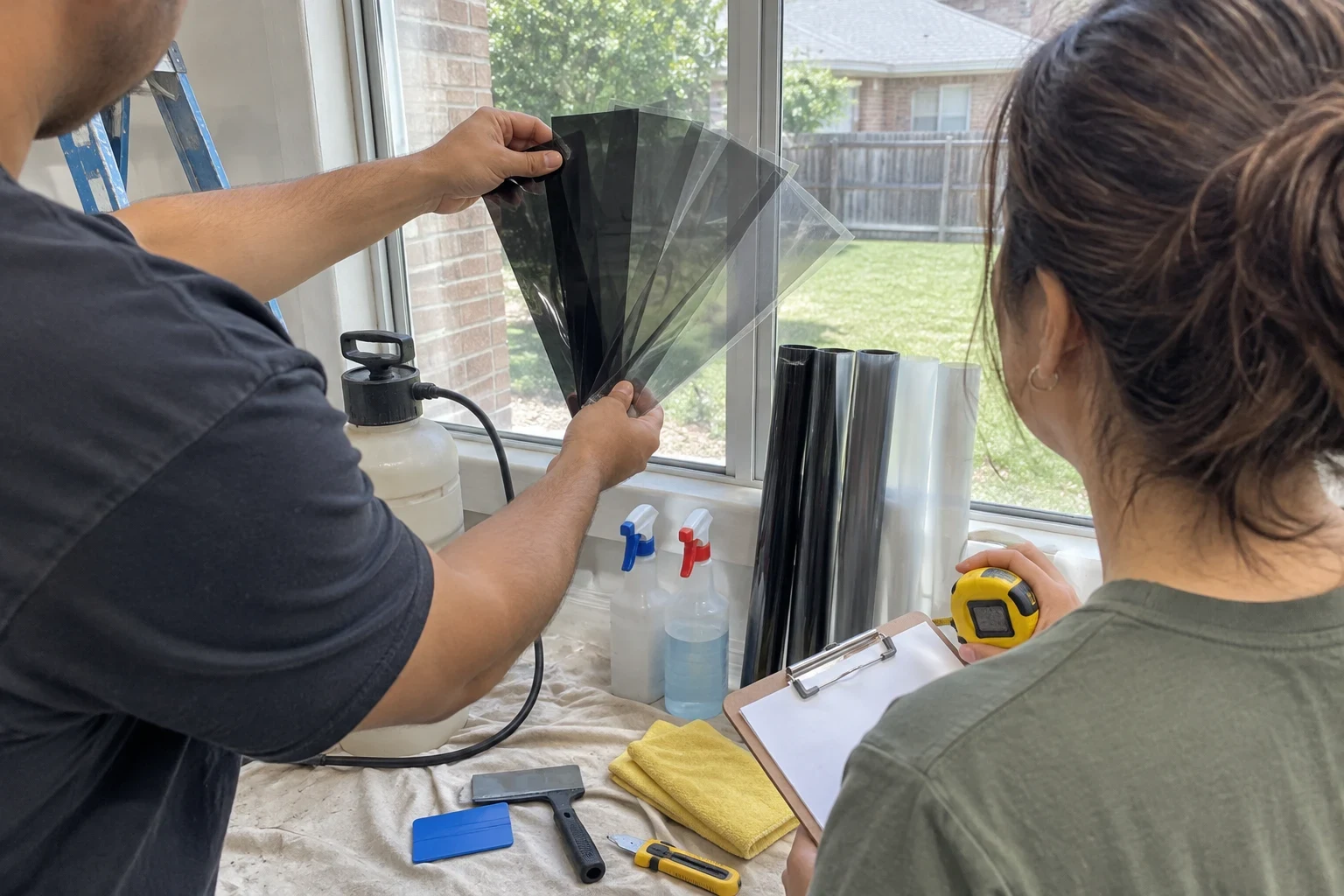
- We hold samples up to your actual windows so you see the shade in your light, not in a brochure. Film looks different at noon than it does at dusk, and we'll show you both if you'd like.
- A glass check before we recommend anything
- Dual-pane and low-E windows can be sensitive to certain films, because some films make the glass run hotter. We check your glass type first and only recommend films that are suited to it.
- Careful installation and cleanup
- We lay down drop cloths, move what needs moving and clean each pane before the film goes on. When we leave, the only sign we were there is the film.
- Care instructions in writing
- You get simple instructions on curing time and cleaning, so the film stays clear and stuck for years.
Signs your home could use window film
One room is always hotter
If the AC runs hard but one room stays warm every afternoon, that room's glass is usually the cause. Film with good heat rejection takes much of that load off the system.
Floors and furniture are fading
A lighter strip on a rug or a faded sofa arm is UV damage. Film blocks the UV that causes it.
Glare on screens
Squinting at the TV or a laptop in the afternoon is a glare problem, and a light film can fix it without blackout shades.
Blinds that never open
If you keep the blinds shut all day for heat or privacy, you're paying for a view you never see. The right film lets you open them again.
Neighbors can see in
Street-facing rooms and windows close to the next house often need daytime privacy. Our privacy window tinting page covers those options in more detail.
How a tinting day goes
- 1
Free quote by phone
You tell us about the rooms and windows that bother you. We ask a few questions and set a time to look at the glass and bring samples.
- 2
Choosing the film together
We explain the two numbers that matter most: how much visible light gets through and how much solar heat is rejected. Then you pick, with no pressure to buy film for windows that don't need it.
- 3
Installation
We clean each pane, cut the film to fit and squeegee it on with a water solution. A typical home is done in a day, and you can stay in the house while we work.
- 4
Curing
For the first few weeks you may see small water pockets or a slight haze, especially in cooler weather. That's normal and clears as the film dries, so leave the windows uncleaned until it does.
What affects the price of home window tinting
We price by the window, and your quote lists each one so you can see where the money goes. Nothing gets added on the day. These are the things that move the number most.
- Type of film
- Ceramic film rejects more heat while staying lighter, and it costs more than standard dyed or metalized film. We'll tell you when the cheaper film is good enough for a given window.
- Size and number of windows
- More glass means more film and more labor. Large picture windows and sliding doors take longer to fit than standard panes.
- Access
- Tall windows above a staircase or in a two-story living room need ladders or scaffolding, which adds time.
- Removing old film
- If old film is peeling or purple, it has to come off cleanly before new film goes on. That's careful work and is priced separately.
Questions about home window tinting
Something not covered here? (281) 688-5219
Will window film make my house dark inside?
Not unless you want it to. Light ceramic films let most of the daylight in and still block a lot of heat. We'll show you samples on your glass so you can judge for yourself.
Can you tint double-pane or low-E windows?
Yes, in most cases, but not with every film. Some films can make insulated glass run too hot. We check your windows first and only recommend films made for that kind of glass.
Will it lower my energy bills?
It can, mostly in summer, because your AC has less heat to fight in sunny rooms. How much depends on how many windows face the sun and how much glass you have. We'll point out which windows are worth doing for energy savings and which aren't.
How do I clean tinted windows?
Wait until the film has fully cured. After that, use a soft cloth or rubber squeegee with a mild, ammonia-free cleaner. Skip razor blades and scrub pads on the film side.
Can I still see out at night?
With light and non-reflective films, yes, much like untinted glass. Reflective films can act like a mirror from inside after dark, which is something we explain before you choose one.
Find out which film fits your rooms
Tell us which rooms run hot or bright, and we'll explain your options plainly. We work in homes across Stafford, Sugar Land, Missouri City and nearby.