ServicesNon-Reflective Window Film
Non-Reflective Window Film in Stafford
You want cooler rooms and less glare, but you don't want mirrored windows. Non-reflective window film rejects heat and blocks UV while your glass keeps its natural look, inside and out. We explain each option plainly so you can pick with confidence.
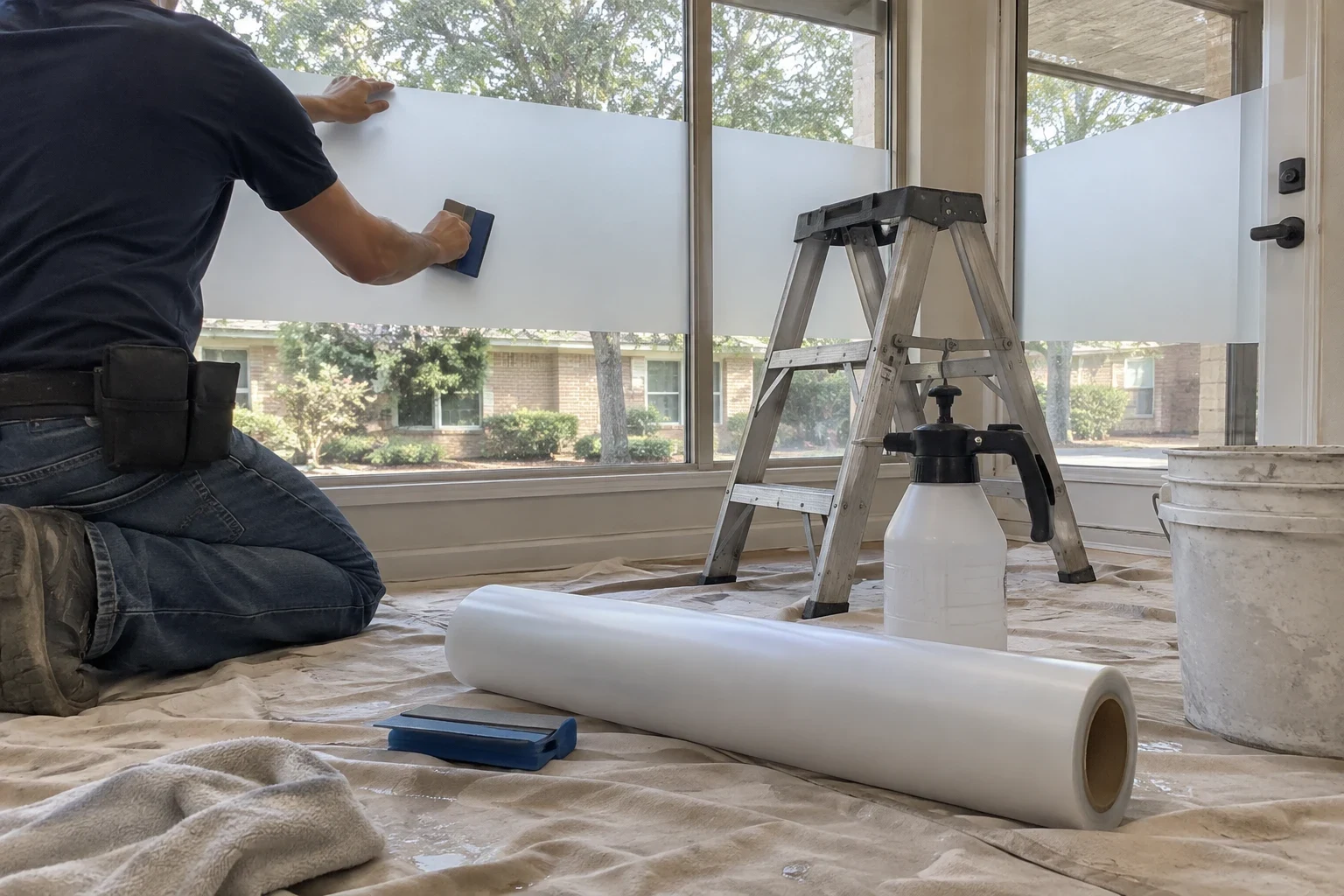
What Non-Reflective Film Is and Who It Suits
Most window film works in one of two ways. Some films bounce heat back with a metal layer, which gives glass a shiny, mirror-like finish. Non-reflective films do the work inside the film itself, using ceramic or carbon particles that absorb and reject infrared heat. The surface stays low-shine, so your windows look close to how they look now.
That makes it a good fit if your HOA frowns on mirrored glass, if you dislike seeing your own reflection in the window after dark, or if you simply want the house to look unchanged from the street. Business owners pick it for storefronts and front offices where a mirror finish would feel cold to customers.
Here is the honest trade-off. A non-reflective film gives less daytime privacy than a mirrored one. If keeping people from seeing in is your main goal, our Privacy Window Tinting or Reflective Window Film pages may suit you better, and we'll tell you so on the call.
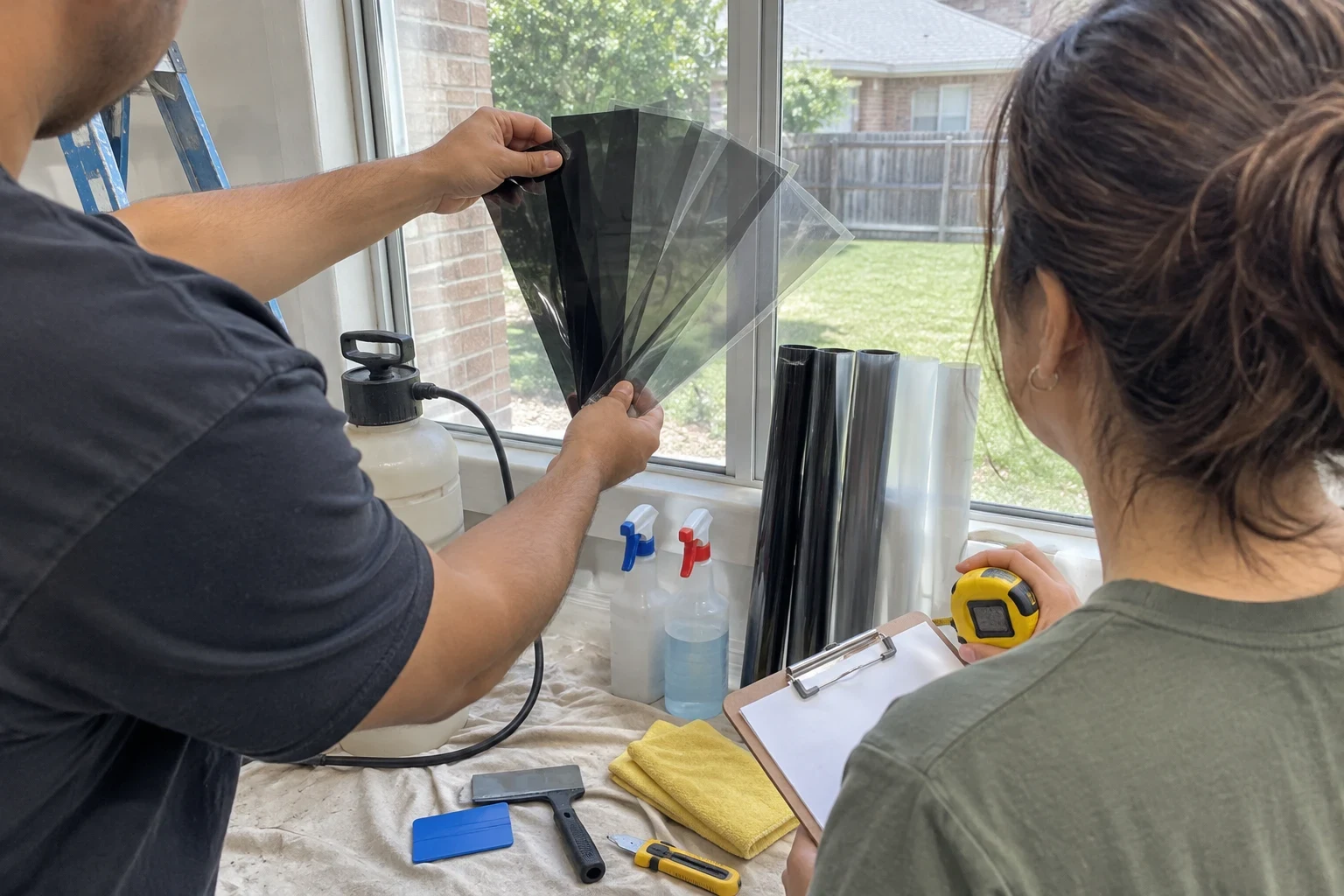
What's Included When We Install It
- 01
A walk-through of your windows
We look at which rooms get the hardest sun, what kind of glass you have and what's bothering you most, whether that's heat, glare or fading.
- 02
Film samples on your own glass
We hold real samples up to your windows so you can see the color and shine in your own light. A film looks different on a west window at 4 p.m. than it does in a brochure.
- 03
A glass compatibility check
Dual-pane and larger panes can build up heat stress under the wrong film. We check the glass type and only recommend a film that's suited to it.
- 04
Careful prep and clean install
We cover floors and sills, take down blinds where needed, scrape and clean each pane, then cut the film to fit with a tight, even edge.
- 05
Cleanup and care instructions
We pick up the trimmings and wipe down the area before we leave. You get simple instructions on curing and cleaning so the film lasts.
Questions about Non-Reflective Window Film?
Call(281) 688-5219Signs Non-Reflective Film Is the Right Choice
Hot rooms you avoid in the afternoon
If a bedroom or living room becomes uncomfortable once the sun swings around, film that rejects infrared heat can take the edge off without darkening the view much.
Glare on screens and the TV
Washed-out screens and squinting at your desk are classic signs. Non-reflective film cuts glare while keeping the room bright.
Faded floors, rugs and furniture
Sun fading creeps up slowly. Quality films block nearly all UV, which is one of the main causes of fading.
You dislike the mirror look
Maybe you've seen mirrored windows nearby and know you don't want that on your house. Or your HOA has rules about exterior appearance.
A dark mirror at night
Reflective film can turn your windows into mirrors from inside once the lights are on. Low-reflective film keeps the view out much clearer in the evening.
How the Install Day Goes
- 1
Phone call and free quote
You tell us about the rooms and the problem. We ask a few questions about window size and glass, then set a time to come look.
- 2
Choosing the film together
At your home we show samples and explain the numbers on each spec sheet, like how much heat and visible light each film lets through, in everyday terms.
- 3
Installation
A typical room takes a few hours. We protect the space, clean the glass, apply the film with a slip solution and squeegee out the water.
- 4
Curing
You may see a little haze or small water spots for a few weeks while the film dries. That's normal and clears on its own, faster in sunny weather. Wait until it's fully cured before cleaning the glass.
What Affects the Price
Every job is priced from your actual windows, so we give you a quote after we've seen them. The total mostly comes down to how much glass there is and which film you choose. We list each line clearly so nothing surprises you later.
- Square footage of glass
- More and larger windows mean more film and more labor. A few problem windows cost far less than a whole house.
- Film type
- Ceramic non-reflective films reject the most heat and cost more than carbon or dyed films. We'll show you where the extra spend actually pays off and where it doesn't.
- Access and window shape
- High transoms, two-story windows and panes divided by grids take more time and sometimes ladders or lifts.
- Old film removal
- Peeling or bubbled film has to come off and the adhesive cleaned away before new film goes on. That adds time to the job.
Non-Reflective Film Questions
Will non-reflective film keep my house as cool as mirrored film?
A mirrored film usually rejects a bit more heat at the same darkness. A good ceramic non-reflective film comes close, and many people find the difference small next to how much better it looks. We'll compare the spec numbers side by side for your windows.
Can people see inside during the day?
Somewhat less than with bare glass, but this film isn't built for daytime privacy. At night, with lights on inside, people outside can see in. If privacy matters most, ask us about privacy film options.
Will it make my rooms darker?
That depends on the shade you choose. Lighter non-reflective films let in most of the daylight while still blocking heat and UV. We bring several shades so you can see the difference in your own room.
Does it interfere with phone or Wi-Fi signals?
Ceramic and carbon films contain no metal, so they don't block cell or Wi-Fi signals the way some metalized films can. That's one quiet advantage of going non-reflective.
Is it safe on double-pane windows?
Usually, as long as the film is matched to the glass. Some films absorb enough heat to stress certain dual-pane units, which is why we check your glass before recommending anything.

See How It Looks on Your Windows
Tell us which rooms are too hot or too bright. We'll talk through your options in plain terms and set up a time to show samples on your glass.