ServicesReflective Window Film
Reflective Window Film in Stafford
Reflective window film puts a thin metal layer on your glass that bounces sunlight away before it turns into heat. Rooms stay cooler, glare drops and people outside see a mirror during the day. We explain how it looks and behaves before you decide.
What reflective film does, in plain terms
Most window film soaks up some of the sun's energy. Reflective film does something different: a microscopically thin layer of metal sends a large share of that energy straight back outside. That is why it is one of the strongest options for heat rejection on windows that take hard afternoon sun.
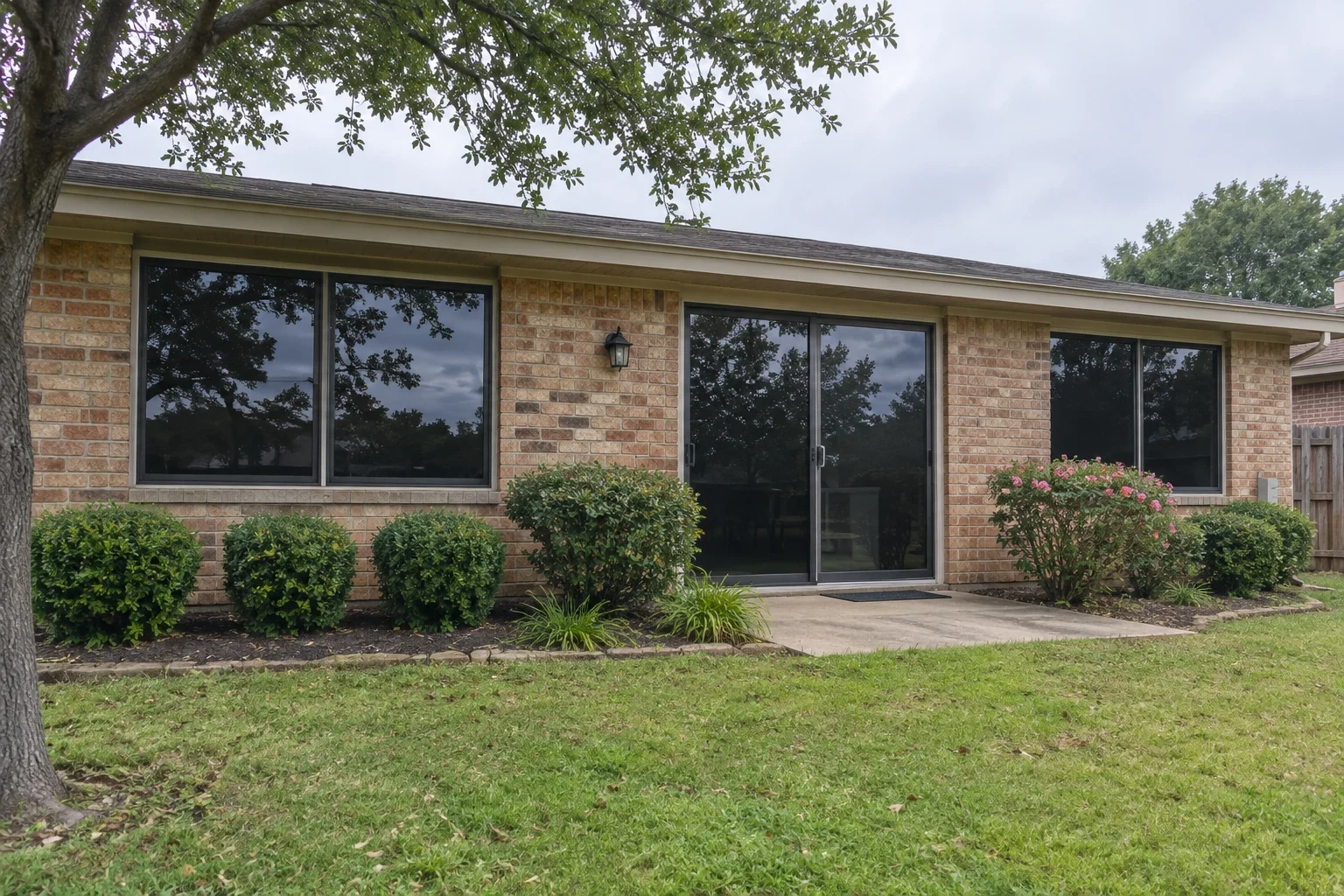
It also changes how your glass looks. From the street or yard, a reflective window reads as a mirror in daylight, in silver, bronze or a softer gray. From inside, the view stays clear and the room looks a shade dimmer. After dark the effect flips. When your lights are on and it is dark outside, people can see in and you will see your own reflection, so you will still want blinds or curtains at night.
We put it on the windows where it earns its keep, usually west and south-facing glass, large picture windows and sunrooms. If the mirror look is not for you, our Ceramic Window Film and Non-Reflective Window Film pages cover options that cut heat without changing the outside appearance.
What comes with a reflective film install
A look at your actual windows
We check the glass type, the frames and the seals on each window. Single-pane and dual-pane glass handle heat differently, and some films are not a safe match for certain insulated units.
Shade and reflectivity choices
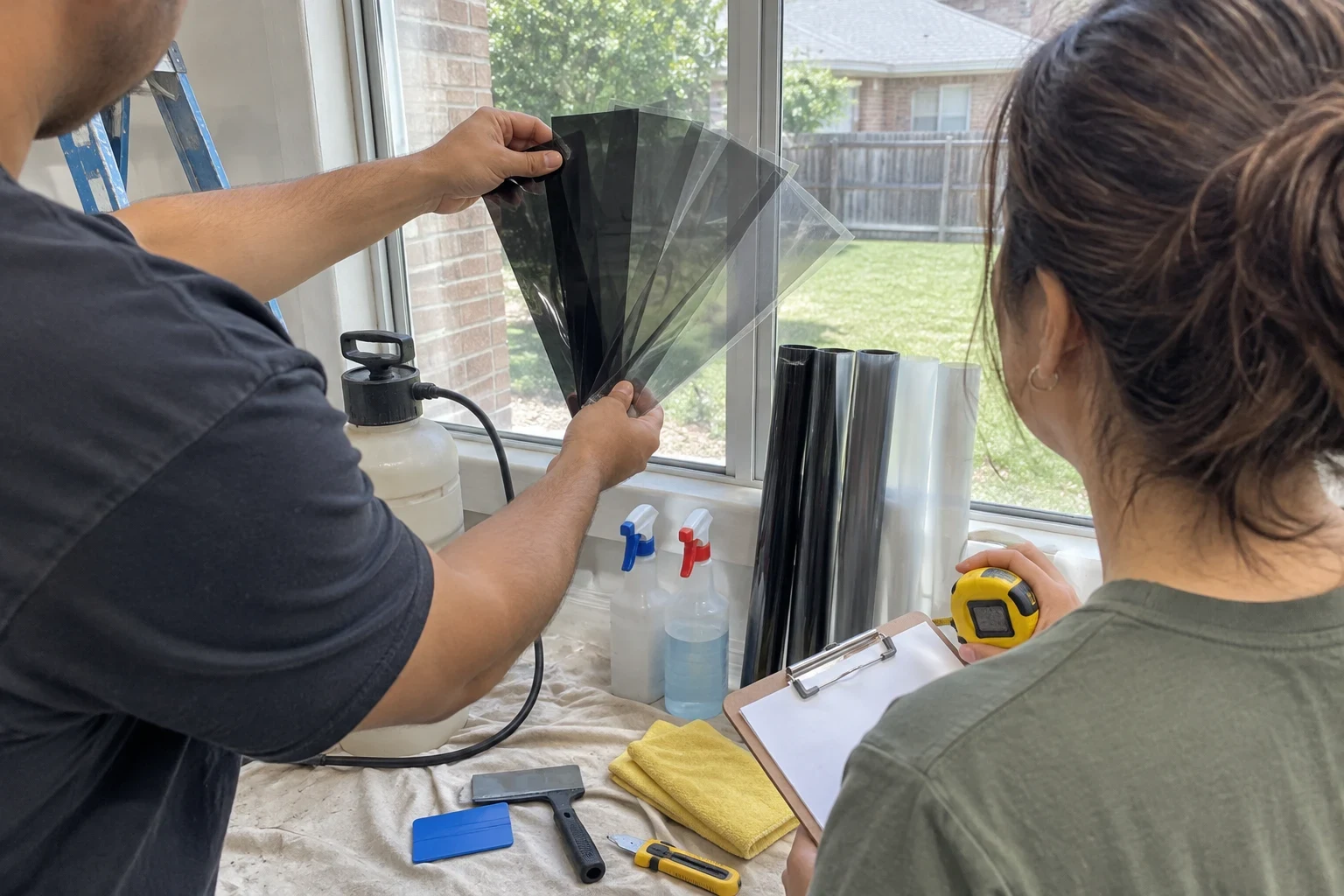
We bring samples so you can hold silver, bronze and neutral films against your own glass. Lower-reflective and dual-reflective versions keep the inside of the room from feeling like a mirror at dusk.
Careful prep of the glass
Every pane is scraped and cleaned so dust and old residue do not get trapped under the film. We lay down drop cloths and protect sills, floors and nearby furniture before any water touches the glass.
Removal of old film
If faded or bubbling film is already on the windows, we strip it and clean off the adhesive first. New film over old film never bonds properly.
Cleanup and care notes
We wipe down the work area and tell you how long to wait before cleaning the glass, plus which cleaners are safe to use on the film.
Signs reflective film is the right call
- One room is always the hottest
- A bedroom or living room that stays warm long after the AC kicks on usually has glass taking direct sun. Reflective film is built for exactly that load.
- Glare washes out your screens
- If you close the blinds every afternoon just to see the TV or a laptop, the film can cut that glare while keeping the view.
- Furniture and floors are fading
- Rugs, wood floors and fabrics lose color near sunny windows. The film blocks most UV, which slows that fading considerably.
- You want daytime privacy without curtains
- Street-facing windows can stay open to light during the day while neighbors and passersby see a reflection instead of your living room.
- Your AC runs hard all summer
- Through a Texas summer, sun-baked glass adds heat the system has to remove. Cutting it at the window can help with energy savings and comfort.
How the job goes, start to finish
- 1
A phone call first
You tell us which rooms bother you and what you are hoping to fix. We explain how reflective film compares with the other options and set up a time to see the windows.
- 2
Visit, samples and a written quote
We measure, check the glass and show samples on your windows in real light. You get a clear quote that lists each window and the film we recommend, with no pressure to decide that day.
- 3
Install day
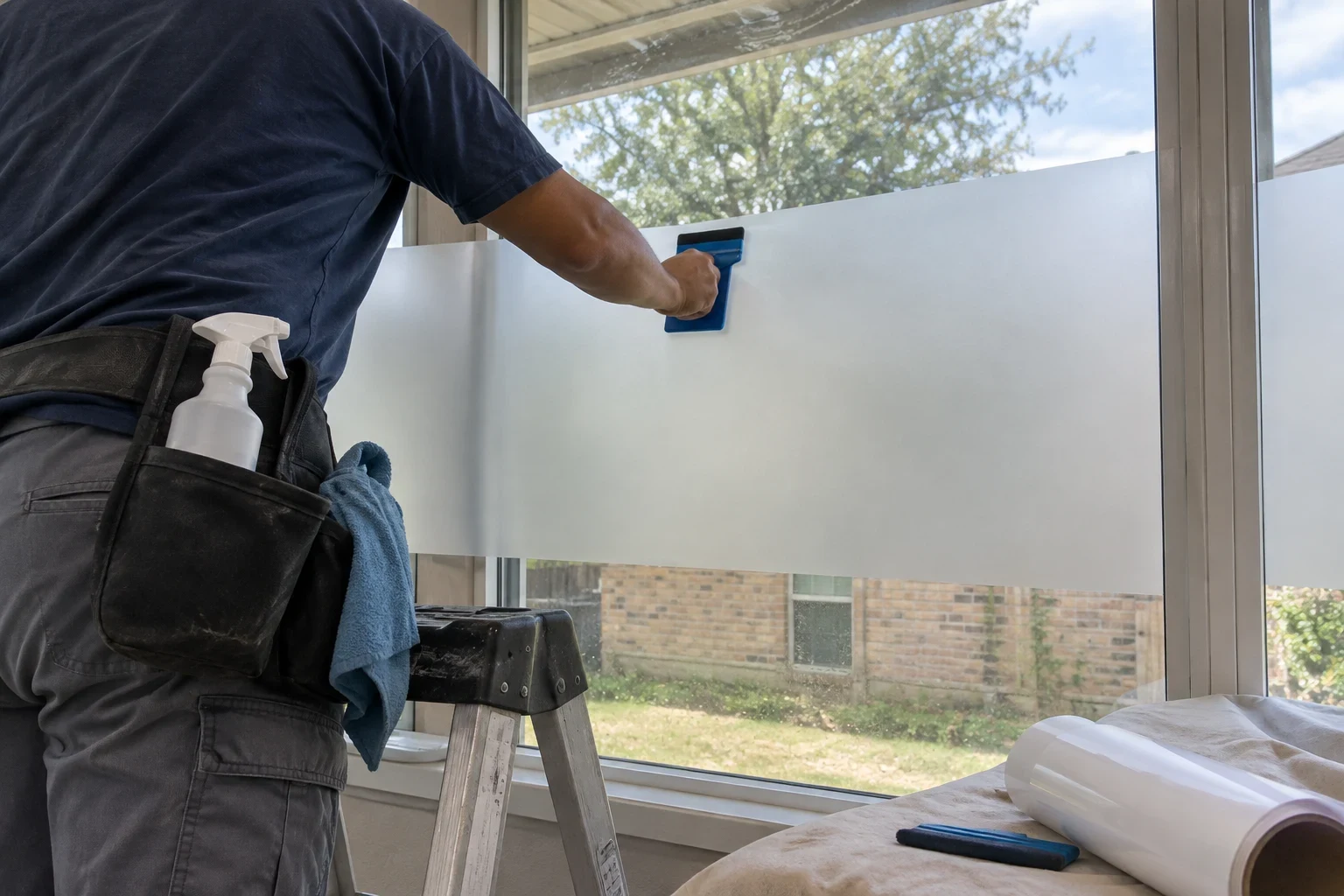
We protect the room, clean each pane and apply the film with a slip solution, then squeegee out the water and trim the edges tight to the frame. Most homes take a few hours to a day, depending on the number of windows.
- 4
Curing
For the first days or weeks you may notice small water pockets or a light haze. That is normal moisture drying out, and it clears on its own, faster in warm sunny weather. Leave the glass alone until it does.
What moves the price of reflective film
Reflective film is priced by the window, so your quote depends on what you have and what you choose. We go through each line with you so nothing on the final bill comes as a surprise. Here are the main things that change the number.
- Total glass area
- More square footage means more film and more labor. A few large windows can cost more than several small ones.
- Film grade
- Standard silver films cost less than dual-reflective or lower-reflective films designed to look better from inside at night.
- Height and access
- Second-story windows, transoms and tall living room glass need ladders or extra setup time.
- Old film removal
- Stripping worn film and baked-on adhesive adds time before the new film can go on.
- Glass type
- Some dual-pane or specialty glass calls for a specific film to stay within safe heat limits, which can affect what you pay.
Reflective window film questions
- Will people be able to see into my house at night?
- Yes, once it is darker outside than inside. The mirror effect works toward the brighter side, so at night with lamps on, the view reverses. Plan on blinds or curtains for evening privacy, or look at our Privacy Window Tinting options if you want a view-blocking film that works day and night.
- Is reflective film safe on dual-pane windows?
- Often it is, but not every film suits every insulated unit. Highly reflective film raises the temperature of the glass, and some combinations can stress the seal. We check your glass during the visit and only recommend a film that is a safe match.
- Does my HOA allow mirrored windows?
- Some associations limit how reflective or what color exterior glass can be. It is worth checking your HOA rules before you choose. If mirrors are restricted, a neutral ceramic or non-reflective film can still give you strong heat rejection.
- Will the room feel dark?
- It will look somewhat dimmer, similar to wearing light sunglasses. How much depends on the film you pick. Seeing samples on your own windows is the easiest way to judge, which is why we bring them.
- Can reflective film affect phone signal?
- Because it contains metal, a heavy reflective film can slightly weaken cell reception in some rooms. Most people never notice. If you already have weak signal at home, tell us and we can suggest a ceramic film, which has no metal in it.
Find out if reflective film fits your windows
Tell us which rooms run hot or catch the worst glare, and we will walk you through the options in plain language. We work in Stafford and nearby towns like Sugar Land and Missouri City.